That Thumbs Up Just Declared War: The Chaotic World of Emoji Diplomacy
Let's set the scene. You've just wrapped up a totally fine email exchange with a colleague in Tehran. Everything went smoothly. You want to signal your approval. You reach for the most universally cheerful symbol in your digital arsenal — the classic 👍 thumbs up — and you hit send with the confidence of a golden retriever fetching a stick.
Congratulations. You have just, in certain parts of the Middle East and West Africa, communicated something roughly equivalent to a raised middle finger.
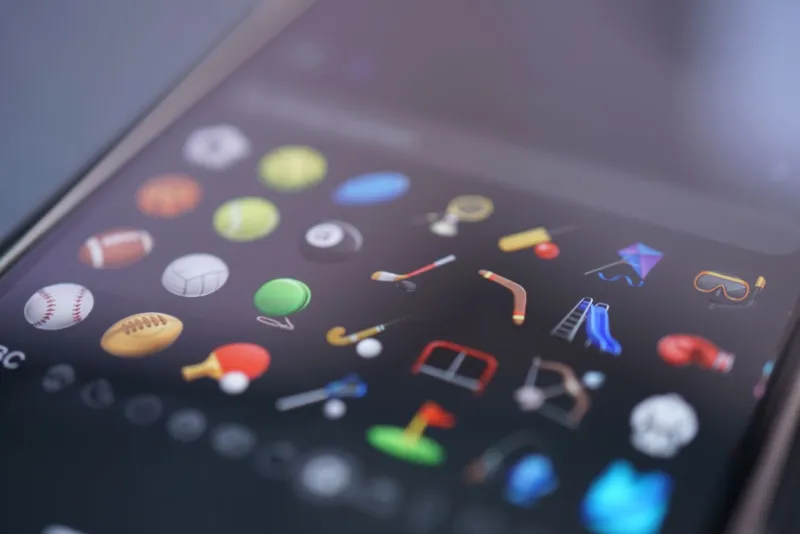
Welcome to the beautiful, bewildering, occasionally catastrophic universe of cross-cultural emoji communication. Buckle up, because your phone's keyboard is basically an international incident waiting to happen.
The Great Thumbs Up Betrayal
Americans love the thumbs up. It's the emoji equivalent of a firm handshake, a pat on the back, a "you got this, champ." It shows up in our texts approximately 47 times a day — after good news, mediocre news, and news we didn't actually read but felt obligated to acknowledge.
But in parts of Iran, Iraq, and several West African nations, the gesture historically carries a deeply rude connotation. Think less "great job" and more "sit and spin." The thumbs up as an insult traces back to ancient Rome (yes, that ancient Rome, where it reportedly signaled death for a gladiator — Hollywood lied to us about which direction meant what, but the point stands: thumbs have always been complicated).
So the next time you're thumbs-upping your way through a global group chat, maybe pause for a half second. Or don't. Live dangerously.
The Peach Problem (And Why Tokyo Is Confused)
In North America, the peach emoji 🍑 has completed what linguists might generously call a "semantic journey." It no longer primarily represents fruit. It represents, well... a specific part of human anatomy, and it does so with zero ambiguity in most American digital conversations.
Japan, however, uses the peach emoji far more literally. It's a peach. A delicious summer fruit. A wholesome snack. Japanese digital communication leans toward a much more literal interpretation of food emojis in general — partly because Japan has an extraordinary food culture where a beautifully rendered bowl of ramen deserves genuine, sincere emoji representation without any subtext.
This creates a spectacular potential for misunderstanding. An American texting their Japanese pen pal "I had a great peach today 🍑" is making a completely different statement than intended. And a Japanese person sending peach emojis to their American friends while discussing a trip to a farmers market is going to get some very confused, possibly delighted responses.
The Skull That Means "I'm Dying Laughing"
Here's a generational and cultural twist that's particularly American but has started bleeding into global youth communication: the skull emoji 💀.
For older users or folks in many other countries, a skull is universally understood as a symbol of death, danger, or at minimum something grim. Poison labels. Pirate flags. Heavy metal album covers.
But for Gen Z Americans? Sending a skull means you found something so funny you have metaphorically ceased to exist. "I'm dead." "I died." "💀" — it's the highest possible expression of comedic appreciation. It has completely eclipsed the laughing-crying face 😂, which many younger users now consider the calling card of someone's dad trying to seem relatable.
Send that skull to someone in, say, rural France who doesn't follow American internet culture, and you'll have a very different kind of conversation on your hands.
The Clapping Emoji's Hidden Anger
In the US, clapping hands 👏 between words has evolved into a form of emphasis with a distinctly confrontational edge. "We. Need. To. Talk. 👏 About. This. 👏" is not applause. It is barely contained fury delivered in staccato digital bursts. It's what happens when someone is too polite to type in all caps but still wants you to feel every syllable.
In other cultural contexts, particularly in parts of Europe and Asia, clapping hands is still... clapping. Appreciation. Celebration. Bravo. Which means someone reading an American's aggressively punctuated emoji rant might think they're receiving enthusiastic praise for something they did, when in reality they're being dragged through the digital town square.
Language, as always, is a two-way street with a missing traffic light.
Regional Emoji Dialects Are a Real Thing Now
Linguists and communication researchers have started using the term "emoji dialect" to describe the way different communities — regional, generational, cultural — have developed their own emoji vocabularies largely independent of each other.
In Brazil, for instance, emoji use tends to be more expressive and dense, with strings of emojis functioning almost like visual sentences. In Japan (which, it's worth noting, invented the emoji — the word comes from Japanese: 絵文字, meaning "picture character"), there's a rich tradition of highly specific emoji that didn't make it into the global Unicode set, leading Japanese users to develop creative combinations that outsiders simply cannot decode.
Meanwhile, in the US, we've essentially turned emoji into a second language with its own slang, idioms, and cultural references that evolve faster than any dictionary can track. The eggplant emoji. The red flag. The clown. These are not vegetables, navigation tools, or circus performers. They are entire emotional states.
So What Do We Do With All This Chaos?
Here's the genuinely fun part: emoji miscommunication, for all its potential awkwardness, is also one of the most purely human things happening on the internet right now. We invented a universal visual language to help us connect across barriers, and we immediately made it wildly regional, generationally specific, and deeply weird.
It's basically what happened with actual language, just compressed into a decade instead of a millennium.
The best approach, honestly, is a combination of curiosity and humility. If you're communicating with someone from a different culture or generation, maybe don't lean heavily on the eggplant. When in doubt, the classic smiley face 🙂 is fairly safe — though even that one carries a vaguely sinister undertone in certain American internet contexts, so, you know. Good luck out there.
The world is smaller than it's ever been, our screens connect us to people on every continent, and somehow we're all out here sending each other tiny pictures of fruit and hoping for the best. That's not a failure of communication. That's just being human — chaotic, creative, and perpetually one emoji away from an international incident.
👍