Two Wheels, Infinite Personalities: The Planet's Most Gloriously Weird Bike Cultures
Two Wheels, Infinite Personalities: The Planet's Most Gloriously Weird Bike Cultures
Somewhere between the invention of the penny-farthing and the rise of the $4,000 carbon-fiber road bike, humanity collectively decided that cycling wasn't just transportation — it was a personality. A lifestyle. A full-blown cultural statement. And depending on where you are on this spinning globe of ours, that statement can range from "I am a sensible, punctual professional" to "I am a glitter-covered chaos agent and I brought a speaker the size of a refrigerator."
Welcome to the world's most spectacular bike cultures. Grab a helmet (or don't, if you're Dutch), and let's ride.
The Netherlands: Where Bikes Are Basically Citizens
Let's start with the gold standard, the cycling promised land, the place where bikes outnumber people and nobody finds that even slightly alarming: the Netherlands. There are roughly 23 million bicycles in a country of 17 million people. Do the math. Bikes are winning.
But what makes Dutch cycling culture truly special isn't the infrastructure (though those separated bike lanes are frankly embarrassing to every American city planner). It's the attitude. Dutch cyclists do not wear helmets. They do not wear spandex. They do not look like they are trying. They cycle in full business suits, in wedding dresses, while carrying a child on the front rack, another on the back, a bag of groceries in the basket, and a look of absolute serene indifference on their face. It's less a sport and more a form of elegant, slightly smug meditation.
If Amsterdam cyclists were a font, they'd be Helvetica. Timeless. Efficient. Quietly judging your kerning.
Denmark: Cargo Bikes and the Art of Hauling Everything
Just a short ferry ride away, Copenhagen took the Dutch model and said, "Cool, but what if we made it cozier?" Enter the Danish cargo bike — the christiania cykel — a long-framed, three-wheeled marvel originally designed in the famous Christiania commune in the 1970s. Today, these magnificent beasts haul children, dogs, groceries, flat-pack furniture, and on at least one documented occasion, a full-size Christmas tree.
Danish cycling culture is essentially hygge on wheels. It's the cycling equivalent of a warm blanket and a mug of cocoa, except you're also somehow commuting at 12 miles per hour through light rain without breaking a sweat.
Colombia's Titi Bicycle Gangs: Where Cycling Becomes a Party
Now buckle up, because we're heading somewhere that will completely rewire your understanding of what a bicycle can be.
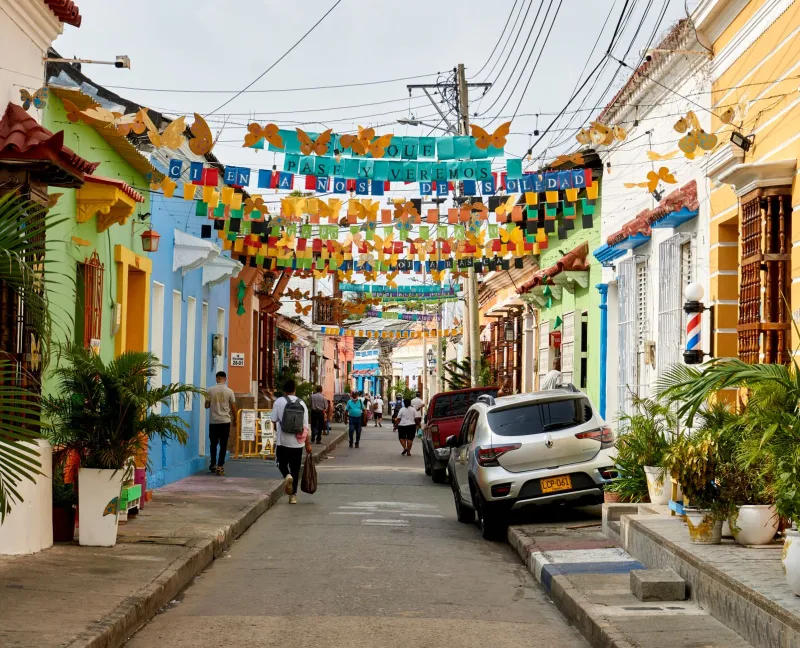
In Colombia — and this is where things get truly spectacular — cycling isn't just a mode of transport or a fitness hobby. In certain cities and towns, it's a full-blown cultural institution wrapped in neon lights, cumbia rhythms, and community pride. Enter the world of the bicicletas tuning and the legendary weekend cycling groups that transform ordinary streets into rolling festivals.
The tradition of the titi — a term of endearment used in parts of Latin America roughly equivalent to "buddy" or "little one" — infuses these cycling communities with an irresistible warmth. Groups of cyclists deck out their bikes with LED strips, custom paint jobs, oversized speakers blasting vallenato and reggaeton, and enough decorative flair to make a Mardi Gras float feel underdressed. These aren't just bike rides. They're mobile neighborhood celebrations.
In cities like Medellín and Bogotá, cycling has also become deeply tied to social transformation. The famous Ciclovía in Bogotá — where over 70 miles of streets are closed to cars every Sunday — draws millions of participants weekly. It started in 1974 as a small experiment and became one of the most successful urban wellness programs on the planet. The bike, in Colombia, is quite literally a vehicle for joy and social change simultaneously.
Japan: Cycling With Invisible Rules
Japan's bike culture operates on a frequency that only becomes audible once you've been there a week. On the surface, it looks mundane — millions of mamachari ("mama's chariot") utility bikes parked outside train stations, ridden by schoolkids and grandmothers alike. But look closer.
There is an entire unspoken code governing where you park, how you signal, which sidewalk sections are acceptable to ride on, and the precise angle at which you should lean your bike so it doesn't inconvenience anyone within a three-meter radius. Breaking these rules won't get you yelled at. You'll just receive a look. You'll know. You'll feel it in your soul for days.
Japanese cycling culture is minimalist, meticulous, and oddly moving in its communal consideration. It's the anti-Colombia, and somehow equally beautiful.
Ethiopia's Giro d'Italia Obsession: The Adwa Cycling Festival
Few people realize that Ethiopia has one of Africa's most passionate cycling communities, fueled in part by the country's long-distance running culture and a growing international presence in competitive road cycling. The annual Tour of Ethiopia has produced riders who've competed at the highest global levels, and in smaller towns, cycling festivals draw enormous crowds who treat local racers like rock stars.
It's a reminder that the bicycle — invented in 19th-century Europe — has been enthusiastically claimed, remixed, and made entirely its own by communities around the world who saw in it something universal: freedom, dignity, and the pure mechanical joy of going fast with your own two legs.
What Your American City's Bike Scene Is Actually Saying
Here's the fun part, US readers: you're not outside this story. You're in it.
Portland, Oregon is basically trying to be Amsterdam (with more flannel). New York City's cycling culture is a chaotic, beautiful, slightly terrifying negotiation between messengers, delivery workers, tourists on Citi Bikes, and the occasional rogue skateboarder. In New Orleans, you can find bike parades with brass bands. In Los Angeles, the CicLAvia events close major boulevards and turn them into exactly the kind of rolling street party that would feel right at home in Bogotá.
And everywhere — in small towns and big cities alike — someone is putting a basket on their cruiser, clipping a light to their handlebars, and deciding that today, they'd rather ride than drive.
The bike doesn't care where it's from. It just goes where you point it. And apparently, no matter which corner of the world you're in, people are pointing it somewhere magnificent.
Next time you're stuck in traffic, just remember: somewhere in Colombia, someone is cruising past on a bike with LED lights, a speaker blasting cumbia, and the biggest smile you've ever seen. That's an option. That's always been an option.