Okay But What If the Secret Handshake People Are Actually Running Things and That's... Fine?
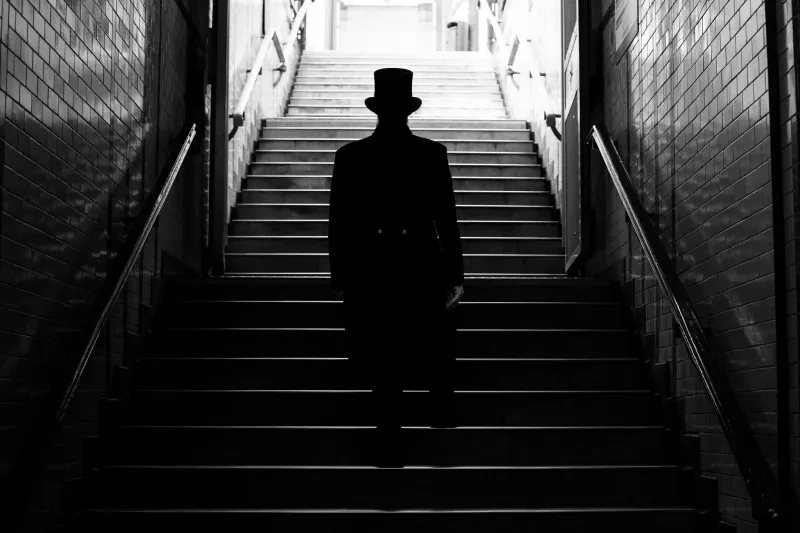
The world, if you've been paying attention, does not always behave like a well-managed operation. Supply chains collapse. Elections get weird. A guy in a Viking hat ends up inside the Capitol building. You ask yourself: is anyone in charge here? And then, somewhere deep in your brain, a quieter voice answers: what if someone is?
Welcome to conspiracy comfort culture — the phenomenon where elaborate, evidence-light theories about shadowy forces controlling reality are, paradoxically, more reassuring than the truth. Because the truth, increasingly, is that nobody is steering the ship. And that is terrifying. A secret cabal of billionaires pulling strings? At least that's a narrative. At least that's a plot.
We're not here to debunk anything (that's what your uncle's Facebook feed is for). We're here to do something more honest: rank the most culturally pervasive conspiracy theories by how strangely, inexplicably comforting they are on a scale of one to ten.
Why We Crave the Conspiracy in the First Place
Psychologists have a term for it: proportionality bias. The human brain struggles to accept that massive, world-altering events can have small, random causes. A lone guy with a grudge changes history? That doesn't compute. But a coordinated operation spanning decades, involving dozens of powerful actors and a very specific parking garage? That feels appropriately sized.
Conspiracy theories are, at their core, a form of pattern recognition gone into overdrive. The same cognitive wiring that helped our ancestors survive on the savanna — spot the hidden threat, connect the dots before the lion does — is now connecting dots between pharmaceutical companies, pop stars, and the Denver Airport's admittedly unsettling murals.
We're not broken. We're just running ancient software on a very confusing modern operating system.
Tier One: Extremely Comforting (8–10 out of 10)
Big Pharma Is Suppressing the Cure
Comfort score: 9/10
The theory: Somewhere in a gleaming laboratory, a scientist discovered the cure for cancer/diabetes/insert-your-ailment-here, and a pharmaceutical conglomerate paid them very handsomely to put it in a drawer and never speak of it again.
Why it's comforting: Because the alternative — that medicine is genuinely hard, that disease is complex and resistant, that brilliant people are working as fast as they can and it's still not fast enough — is devastating. The suppressed cure conspiracy offers something medicine itself sometimes can't: a villain. And villains can be defeated. Complexity cannot.
Bonus comfort: It implies that health is actually simple and someone is just withholding it, which is a much more manageable concept than 'the human body is a chaos machine and we're all just doing our best.'
Secret Societies Are Running the World
Comfort score: 8.5/10
The theory: The Illuminati, the Freemasons, the Bilderberg Group, or some combination thereof meets regularly in wood-paneled rooms to make decisions about global finance, elections, and possibly the entertainment industry.
Why it's comforting: Because someone is in charge! There's a meeting! There are minutes being taken! In a geopolitical moment that feels like a group project where nobody read the assignment, the idea of a disciplined, organized group of adults who have a plan is genuinely soothing. Sure, the plan might involve suppressing the middle class, but at least someone has a whiteboard.
Tier Two: Moderately Comforting (5–7 out of 10)
We Never Actually Went to the Moon
Comfort score: 6/10
Comfort reasoning: If NASA faked the moon landing, that means the government is extremely competent at pulling off elaborate, decades-long deceptions involving thousands of people. That's impressive, actually. That's reassuring organizational capacity. We love to see it.
Decomfort deduction: It also means the most awe-inspiring human achievement in modern history didn't happen, which is a real bummer and costs it several points.
Celebrities Are All in on Something
Comfort score: 5/10
There's a certain comfort in the idea that fame isn't random — that Taylor Swift or Jay-Z or whoever your current pop culture fixation is didn't just get lucky, they signed something. It makes the entertainment industry feel less like a chaotic lottery and more like a club with an application process. Slightly more meritocratic, in a dark way.
Tier Three: Not That Comforting, Actually (1–4 out of 10)
Chemtrails
Comfort score: 2/10
The theory that airplane contrails are chemical agents being deliberately dispersed over the population is not comforting because it means you can't even look at the sky without existential dread. Hard pass. We need the sky. The sky is the one thing we have left.
Simulation Theory
Comfort score: 1/10
Technically not a conspiracy theory, but culturally adjacent. The idea that we're all living in a computer simulation run by a more advanced civilization offers zero comfort because it doesn't even give you a villain to blame. It's just... a render. You're a render. Gerald the succulent was a render. Nothing matters in a render. This is the least comforting possible framework and we're giving it a one.
The Real Takeaway (We Promise We Have One)
Conspiracy theories aren't just about distrust of institutions — they're about the very human need to live inside a story that makes sense. We are, as a species, narrative creatures. We need a beginning, a middle, a villain, and ideally a hero (us). When reality refuses to provide those elements in a tidy package, we build the package ourselves.
The next time someone in your life goes down a rabbit hole, resist the urge to immediately deploy the fact-check. Ask instead: what would it mean to them if the conspiracy weren't true? What chaos would they have to sit with? Sometimes the theory is less about the content and more about the unbearable discomfort of not knowing.
And if that doesn't work, just remind them that the Denver Airport murals are genuinely very weird and we all deserve answers.